

President Donald Trump announced on Thursday that the U.S. military will not livestream the firing-squad execution of Nidal Hasan, the Fort Hood shooter, reversing a Pentagon plan that drew bipartisan backlash. The execution remains scheduled for December 3 at Fort Hood, Texas — the first U.S. military execution since 1961.
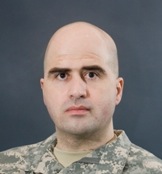
Trump Reverses the Pentagon's Livestream Plan
In a Truth Social post on October 15, Trump said streaming the execution "might have been a strong deterrent for the World to witness how America deals with Terrorists and SCUM like Hasan" but added that "many very good and well meaning people would rather not watch him die, through streaming, or through any other visual device." His verdict: "He will die, as scheduled, by firing squad, but this event will not be streamed."
Trump said the immediate families of the victims may view the execution in person if they choose: "They deserve to witness JUSTICE!" The reversal undoes a plan unveiled by Defense Secretary Pete Hegseth in an October 8 interview with Real America's Voice, recorded aboard the USS Abraham Lincoln, in which Hegseth said the public would be able to watch. "People need to understand that there's serious consequences for these types of things," Hegseth said at the time. The Pentagon later confirmed the livestream plan — the specific platform was never announced.
Why the Livestream Idea Collapsed
The plan drew condemnation from unusual quarters. Vice President JD Vance said he would not watch and doubted it would happen; House Speaker Mike Johnson said colleagues "have concerns" and warned the footage could become "a recruiting tool for future terrorists." Religious leaders objected too: Archbishop Timothy Broglio of the military archdiocese spoke out, Archbishop Paul Coakley called the plan "a barbaric promotion of a culture of death," and Pope Leo condemned capital punishment in all its forms.
Victims' families were firmly opposed. Keely Cahill Vanacker, whose father Michael Cahill was killed in the 2009 attack, said livestreaming would turn "tragedy into entertainment." An ABC News/Washington Post/Ipsos poll released October 15 found 80 percent of U.S. adults — including 64 percent of Republicans — opposed livestreaming the execution. The Wall Street Journal reported that some officials worried a livestream would hand adversaries a propaganda win, and CNN reported Trump privately remarked he had not known Hasan was paralyzed from the waist down.
The 2009 Attack and the Death Sentence
On November 5, 2009, Hasan — then a U.S. Army psychiatrist holding the rank of major — opened fire with an FN Five-seven pistol at the Soldier Readiness Processing Center on Fort Hood, shouting "Allahu Akbar." He killed 13 people, including 12 service members and one civilian — pregnant Private Francheska Velez — and wounded 32 others before civilian police officer Kimberly Munley shot and stopped him. Hasan survived, paralyzed from the waist down.
A 2013 court-martial convicted him of 13 counts of premeditated murder and 32 counts of attempted murder, and sentenced him to death. He has spent the years since on military death row at the U.S. Disciplinary Barracks at Fort Leavenworth, Kansas, one of four military death-row inmates; his appeals ended when the Supreme Court declined his case in March 2025. Trump approved the firing-squad execution in early October after Hegseth recommended it, with acting Army Secretary Adam Telle setting the date: December 3 at 1 p.m. Central Time — the same day of the week, time, and location as the 2009 attack. It would be the first military execution since Private John Bennett was hanged in 1961, and the first military firing squad since World War II in 1945.
What Comes Next
The execution will now proceed as a closed military event, with only victims' families permitted to attend in person. Legal experts had warned that a livestream could run afoul of U.S. law restricting the transmission of graphic material, and no other country is known to livestream judicial executions. The last public execution in the United States took place in 1936. For Trump, the reversal threads a needle: the execution itself — which he has defended as deserved — goes forward, while the spectacle that unsettled even his own party has been dropped.
Watch: Video coverage of Trump reversing the Pentagon's plan to livestream the Fort Hood shooter's execution (YouTube search — no official video segment of the October 15 announcement has been published yet).
Music in this post's reel: Kevin MacLeod - Volatile Reaction (incompetech.com), licensed under CC BY 3.0
Sources: Reuters | CNN | Al Jazeera | The Times