

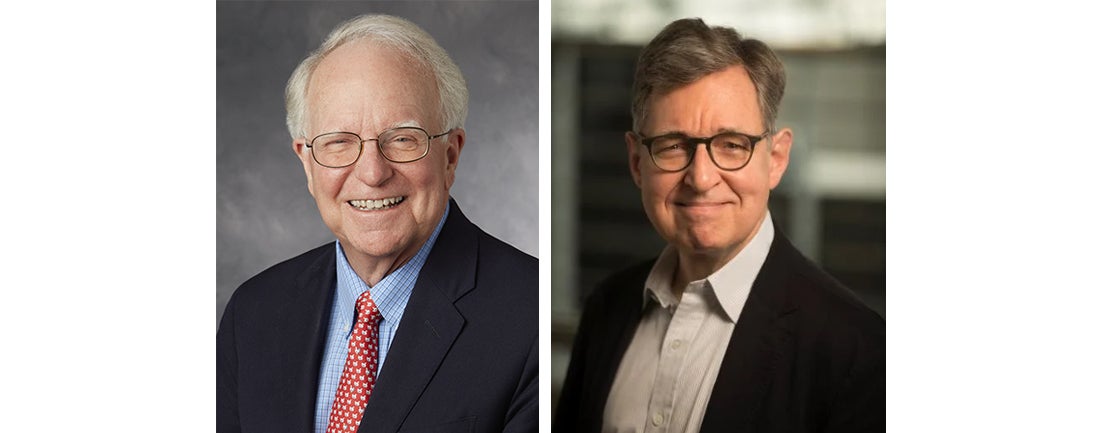
American economists Robert E. Hall of Stanford University and Michael Woodford of Columbia University have won the 2026 Nobel Prize in Economics for building the microeconomic foundations of macroeconomic stabilisation, the Royal Swedish Academy of Sciences announced on Monday, October 12, 2026, in Stockholm.
Why Hall and Woodford won
The two were honored for developing new models for managing recessions and other crises that do not respond to traditional tools. Rather than analyzing links between so-called "macroeconomic" variables such as inflation, production and consumption, Hall and Woodford looked to "microeconomics" to understand how the decisions of individuals and households can affect the whole economy, the Academy said.
Central to their models was the insight that households and businesses are "forward-looking" when making decisions about savings or how to price products. Governments and central banks can influence this view of the future when communicating their plans for fiscal and monetary policy respectively and so "move the economy in the right direction."
"The laureates have helped us smooth out the economy's peaks and troughs," the Academy said in its statement, adding that their models have been "extremely helpful in dealing with the economic downturns that have affected us."
Better equipped for shocks
The committee framed the award around crisis-fighting. John Hassler, chair of the Committee for the Prize in Economic Sciences, said the models "provided us with a stable theoretical foundation for the models that are now used by central banks and governments around the world."
"With them, we are better equipped to deal with shocks in the economy, such as energy crises or sudden changes in how much households consume," Hassler added. The Academy noted the work also matters because it explains how policy communication itself, not just policy action, shapes expectations about spending and saving.
Hall's research clarified how wage rigidity in labor markets amplifies recessions and unemployment, while Woodford systematically explained how interest rates and the expectations of economic agents affect prices and business cycles, laying groundwork for central banks to manage inflation by signaling the future path of monetary policy.
The laureates and the prize
Hall, 83, born in Palo Alto, California, in 1943, is the Robert and Carole McNeil Senior Fellow at the Hoover Institution and a professor of economics, emeritus, at Stanford University. He was the founding director of the NBER Economic Fluctuations and Growth program and chaired the NBER Business Cycle Dating Committee for more than three decades.
Woodford, 71, born in Chicopee, Massachusetts, in 1955, is the John Bates Clark Professor of Economics at Columbia University and author of the influential 2003 book "Interest and Prices." Speaking to the Academy by phone from New York, he called the honor "a tremendous honor" and "a surprise."
The economics prize, worth 12 million Swedish crowns (about $1.2 million, split evenly at 6 million kronor each, roughly $598,000), is the final Nobel prize awarded each year. First awarded in 1969, it is not one of Alfred Nobel's original 1895 awards but was established by Sweden's central bank. Only three women have ever won it, most recently Claudia Goldin in 2023. Last year's prize went to Joel Mokyr, Philippe Aghion and Peter Howitt for work on "creative destruction."
Music in this post's reel: Kevin MacLeod - Lightless Dawn (incompetech.com), licensed under CC BY 3.0
The takeaway
The 2026 economics prize rewards the quiet machinery behind modern crisis response: the models central banks and governments actually use when energy prices spike, households pull back, or inflation surprises. By rooting those models in how real people make real decisions about the future, Hall and Woodford gave policymakers tools that work when the old playbooks fail.